
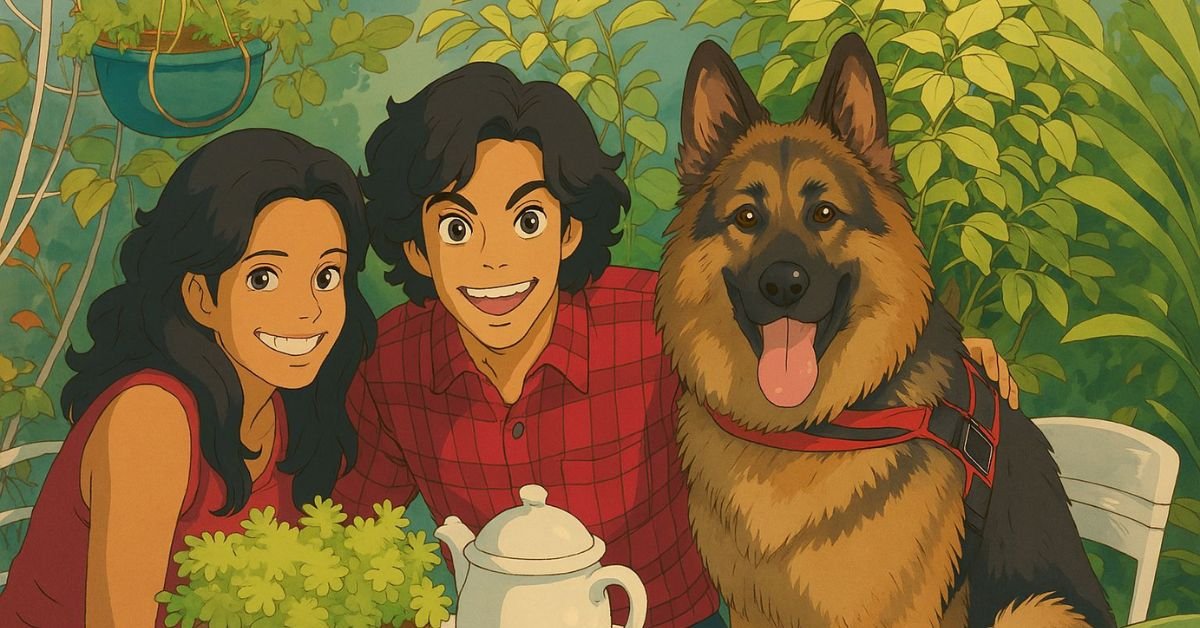
I recently pushed my laptop’s GPUs to their limit, mostly for fun, by getting ChatGPT to generate a set of “very cute” AI-created Ghibli-style art pieces. It started as an experiment, part curiosity, part entertainment, part stress test for the hardware.
What surprised me was not the GPU performance or the artwork itself, but the emotional layer that emerged once the images started forming. Sometimes the best memories are not planned. They reveal themselves when something creative intersects with something personal.
The art pieces were centered around moments with my mother and Bruno, our family dog. Bruno, as always, stole the frame in every image, tongue out, ears up, unapologetically present. The images were not about perfection, but warmth, familiarity, and a quiet kind of joy.
Why Ghibli Style Works for Memories
Ghibli-style art has a softness that feels human without being overly sentimental. The details are gentle but intentional. The colors feel nostalgic even when newly generated. That is why it works so well when you want to transform a real moment into something visual. It does not exaggerate the memory. It preserves its feeling.
The Real Point of AI Art Experiments
AI-generated art often gets reduced to trends, style transfer, or social media aesthetics. But its actual value lies in transformation. Turning a normal family moment into a style that feels timeless gives you a different way to hold onto it. Not louder. Not grander. Just longer.
It also reminded me that creative tools, whether AI or design software, do not replace emotion. They give it a new shape to exist in.
Closing Thought
Maybe the GPUs will recover eventually.
But the bigger takeaway for me was this: creativity becomes most meaningful when it connects to real people, real moments, and real stories.
AI art is fun when it mimics style.
It matters when it transforms memories.
And sometimes, that is enough reason to melt the GPUs just a little further.
