
I recently hit a milestone I didn’t think would be possible this soon. I created the first fully AI-generated visual narrative for Trinity College Kandy, and it turned into one of the most exciting creative-technical projects I’ve worked on so far.
The final output was a short film that reflects the identity, atmosphere, and everyday spirit of the School on the Hill. The goal wasn’t to create something flashy. It was to create something accurate, respectful, and real to the school’s image and values.
The process was more intense than the result makes it look. Prompt engineering took me over 2 hours of iteration to fine-tune every detail. From matching the school uniform colors to adjusting lighting, framing, and overall visual style, each element needed careful prompting. When you’re working with a legacy brand like Trinity’s, small inaccuracies stand out immediately. So it required patience, precision, and constant reviewing.
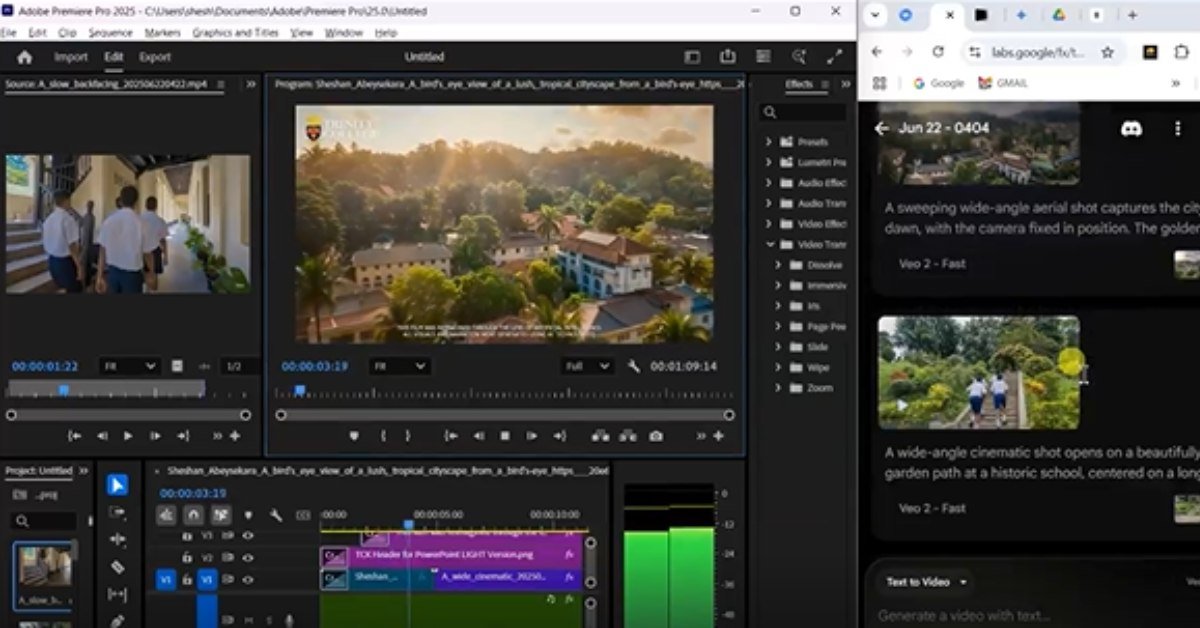
The entire project came together in just under 4 hours using a combination of AI and low-code creative tools. The script was drafted using ChatGPT and then manually edited to make sure it sounded natural. The narration was generated using ElevenLabs, which brought the voice delivery to life. The visuals were created using Google’s Veo 3 model on Google Flow, with still image references and descriptive prompts to maintain consistency. The music was fully AI-composed using Envato Elements. Finally, everything was stitched together in Adobe Premiere Pro, where I handled sync, pacing, transitions, and export.
What excites me most isn’t just the film. It’s what this kind of project represents. Creative production used to require large teams, high budgets, or heavy equipment. Now, with the right prompts and tools, you can translate ideas into visuals quickly while keeping control over quality and intent. That changes who gets to create, build, and tell stories… and how fast they can do it.
This project reminded me that AI isn’t here to replace creativity, it’s here to expand it. The better you communicate with it, the better the output becomes.
